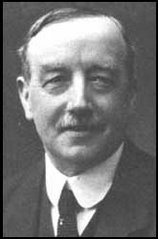
What must be going through Gordon Brown's mind now? Within the space of ten days an eleven point poll lead has shrunk to either parity or a marginal lead, depending on which poll you read. This has led Uncle Arthur to reflect on just how unreliable and limited opinion polls are. Certainly they reflect the increasing volatility and fluctuations of public opinion and as we all know in the past they have been wrong.
On balance, I think there will be an election some time in November. In many ways, looking ahead, it can't get much better for the Prime Minister and perhaps things will improve for Cameron, even without a 'snap election' he will be able to put his difficult summer behind him.
Uncle Arthur fears that at the margins the election could be negative, with the Tories subliminally attacking Brown for being a Scot and Labour attacking Cameron for being a toff. Neither of these points come anywhere near serious politics but I fear they may surface at some point.
I will be interested to see how much of the christian vote is attracted by the proposals on supporting married couples. If it really is effective it should be a wake-up call to Labour to adopt a more coherent view on this and other aspects of social policy.
Saturday, 6 October 2007

Wednesday, 3 October 2007
Cameron's Speech - to the audience not the nation
Uncle Arthur has been listening to Cameron's speech, he seems to have done a good job in cementing his bond with the Tory faithful but surely the job is about crafting a narrative to the nation, it did not appear to do that.
I liked the part where he rejected Utopia, which is welcome from a christian perspective, utopianism is disabling the left and is a dangerous path. Yet, given that the enlightenment framework shapes UK politics to some degree how can the Tories really escape this kind of discourse?
Uncle Arthur thinks the Tory proposals to support married couples are welcome. This is not to say that material wellbeing is needed to regenerate marriage. We have seen UK prosperity rise immeasurably in the last fifty years and this has not necessarily benefitted marriage. It is surely a good thing that the state takes a positive stance on marriage. Labour has done much to support families through social policy and support for children, if it could make the step to be positive about marriage in an explicit sense we could see the party returning to it's roots. Sadly, I will not hold my breath. I will however, stay within the party and make the case.
I liked the part where he rejected Utopia, which is welcome from a christian perspective, utopianism is disabling the left and is a dangerous path. Yet, given that the enlightenment framework shapes UK politics to some degree how can the Tories really escape this kind of discourse?
Uncle Arthur thinks the Tory proposals to support married couples are welcome. This is not to say that material wellbeing is needed to regenerate marriage. We have seen UK prosperity rise immeasurably in the last fifty years and this has not necessarily benefitted marriage. It is surely a good thing that the state takes a positive stance on marriage. Labour has done much to support families through social policy and support for children, if it could make the step to be positive about marriage in an explicit sense we could see the party returning to it's roots. Sadly, I will not hold my breath. I will however, stay within the party and make the case.
God Squad
Uncle Arthur spotted this article on the Progress website, it doesn't seem too unfair when you read it. However, one can't helping wondering that British secularist's on the left seem transfixed by a fear of a US style polity whenever the question of religion and politics is mooted.
God squad
Britain is unlikely to see its own version of America's religious right
08 September 2006
Drive across the United States - as I did this summer while researching a book about politics and the religious right - and you cannot but be struck by the tone of the political debate.
As you fiddle with the car radio dial, and discussion programmes, phone-ins and commentaries hover in-and-out of synch between the rock music and country and western, you get a sense of a country with a wholly different political discourse from the rest of the western world.
It sometimes seems to be a land where it is taken for granted that only Christians can be moral; where other developed countries such as those in Europe are sunk in secularism or, worse, Islam; and where the United States is itself under attack from powerful insurgent forces of liberalism and secret, Godless, conspiracies. If only, you sometimes find yourself thinking.
This, however, is not a religious insurgency that has suddenly sprung up in American society. Religion has played a prominent part in politics since the Pilgrim Fathers struggled ashore on Plymouth Rock. George W Bush is not the first overtly religious president, either. He's a Methodist, but don't forget that his two Democrat predecessors Bill Clinton (admittedly not a shining example) and Jimmy Carter are both southern Baptists, as is Al Gore.
What is more disconcerting is the openly partisan and highly politicised nature of the religious lobbying groups and their access to the airwaves. This is not because what they are saying is necessarily new, but because they are more determined and professional - indeed entrepreneurial in pursuit of followers - in getting their message across. Furthermore, their audience can be easily targeted because it is highly atomised, with little social superstructure beyond its shopping malls and local churches.
The Republican party machine has also been very happy to exploit this congregation: buying up its membership lists, targeting its priorities and playing to its prejudices. This paid off in 2004. The Democrats maximised their votes but the Republicans did better: 78 per cent of white evangelicals - who make up 23 per cent of the total electorate, well over the margin of victory in certain key states - voted for Bush. No wonder the Democrats are belatedly taking lessons in how to appeal to a religious electorate.
Could the same happen here? There are some on the fringes of British evangelical religious life, such as Christian Voice, who would like politics to move that way. But the leaders of the main denominations (just like their counterparts, by and large, in the US) do not wish to be embroiled in partisan politics.
Instead, they are content to lobby on issues which concern them, such as abortion; as they are entitled to do like any other citizen. When Cardinal Cormac Murphy O'Connor, leader of the Catholic Church in England and Wales, restated church policy on this issue shortly before the last general election, he was startled to discover himself being creatively interpreted in the Tory tabloids as throwing the church's weight behind Michael Howard, who had recently announced that he favoured reducing abortion time limits. The cardinal promptly scuttled for cover, terrified of being thought party political.
On the fringes, Christian Voice, which led the assault on productions
of Jerry Springer - the Opera, is nasty and sectarian, but appears to be run largely out of a farmhouse in Wales. Its political agenda - anti-EU, pro-capital punishment and, bizarrely, opposed to traffic speed-humps - is scarcely coherent. Or Christian. It doesn't like Catholics much, either.It can kick up a fuss, but is shunned even by other evangelical groups.
Of course, religious groups other than the Christian evangelicals also flex their muscles, most notably Muslim ones. Their agenda has not, however, been primarily religious. Furthermore, there are crucial differences in the funding and the access to the airwaves that the fringe groups enjoy in Britain, compared with the US. A British Pat Robertson would not be given the airplay or the chance to run his own cable channel. This is unlikely to change.
Perhaps British society is a bit more sceptical, too. Christian Voice's Stephen Green appeared on Question Time this year, but was disconcerted to find himself ridiculed by the audience.
But there is no room for complacency. There is evidence that some of the American multimillionaires who fund the lobbyists in the US have started diverting some of their dollars here as well. Howard Ahmanson, the Californian real estate heir who funds fundamentalist and creationist groups in the US, last year is thought to have given $60,000 to an Anglican conservative evangelical pressure group, campaigning on the gay issue in the Church of England. That's small beer compared with such groups' funding in the US. But Ahmanson has certainly got long arms and deep pockets, and is presumably not giving his money away out of the generosity of his heart.
Stephen Bates is the religious affairs correspondent at the Guardian. He will be speaking at the Progress 10th anniversary conference seminar, We Don't Do God: Is Faith Finding Politics?
God squad
Britain is unlikely to see its own version of America's religious right
08 September 2006
Drive across the United States - as I did this summer while researching a book about politics and the religious right - and you cannot but be struck by the tone of the political debate.
As you fiddle with the car radio dial, and discussion programmes, phone-ins and commentaries hover in-and-out of synch between the rock music and country and western, you get a sense of a country with a wholly different political discourse from the rest of the western world.
It sometimes seems to be a land where it is taken for granted that only Christians can be moral; where other developed countries such as those in Europe are sunk in secularism or, worse, Islam; and where the United States is itself under attack from powerful insurgent forces of liberalism and secret, Godless, conspiracies. If only, you sometimes find yourself thinking.
This, however, is not a religious insurgency that has suddenly sprung up in American society. Religion has played a prominent part in politics since the Pilgrim Fathers struggled ashore on Plymouth Rock. George W Bush is not the first overtly religious president, either. He's a Methodist, but don't forget that his two Democrat predecessors Bill Clinton (admittedly not a shining example) and Jimmy Carter are both southern Baptists, as is Al Gore.
What is more disconcerting is the openly partisan and highly politicised nature of the religious lobbying groups and their access to the airwaves. This is not because what they are saying is necessarily new, but because they are more determined and professional - indeed entrepreneurial in pursuit of followers - in getting their message across. Furthermore, their audience can be easily targeted because it is highly atomised, with little social superstructure beyond its shopping malls and local churches.
The Republican party machine has also been very happy to exploit this congregation: buying up its membership lists, targeting its priorities and playing to its prejudices. This paid off in 2004. The Democrats maximised their votes but the Republicans did better: 78 per cent of white evangelicals - who make up 23 per cent of the total electorate, well over the margin of victory in certain key states - voted for Bush. No wonder the Democrats are belatedly taking lessons in how to appeal to a religious electorate.
Could the same happen here? There are some on the fringes of British evangelical religious life, such as Christian Voice, who would like politics to move that way. But the leaders of the main denominations (just like their counterparts, by and large, in the US) do not wish to be embroiled in partisan politics.
Instead, they are content to lobby on issues which concern them, such as abortion; as they are entitled to do like any other citizen. When Cardinal Cormac Murphy O'Connor, leader of the Catholic Church in England and Wales, restated church policy on this issue shortly before the last general election, he was startled to discover himself being creatively interpreted in the Tory tabloids as throwing the church's weight behind Michael Howard, who had recently announced that he favoured reducing abortion time limits. The cardinal promptly scuttled for cover, terrified of being thought party political.
On the fringes, Christian Voice, which led the assault on productions
of Jerry Springer - the Opera, is nasty and sectarian, but appears to be run largely out of a farmhouse in Wales. Its political agenda - anti-EU, pro-capital punishment and, bizarrely, opposed to traffic speed-humps - is scarcely coherent. Or Christian. It doesn't like Catholics much, either.It can kick up a fuss, but is shunned even by other evangelical groups.
Of course, religious groups other than the Christian evangelicals also flex their muscles, most notably Muslim ones. Their agenda has not, however, been primarily religious. Furthermore, there are crucial differences in the funding and the access to the airwaves that the fringe groups enjoy in Britain, compared with the US. A British Pat Robertson would not be given the airplay or the chance to run his own cable channel. This is unlikely to change.
Perhaps British society is a bit more sceptical, too. Christian Voice's Stephen Green appeared on Question Time this year, but was disconcerted to find himself ridiculed by the audience.
But there is no room for complacency. There is evidence that some of the American multimillionaires who fund the lobbyists in the US have started diverting some of their dollars here as well. Howard Ahmanson, the Californian real estate heir who funds fundamentalist and creationist groups in the US, last year is thought to have given $60,000 to an Anglican conservative evangelical pressure group, campaigning on the gay issue in the Church of England. That's small beer compared with such groups' funding in the US. But Ahmanson has certainly got long arms and deep pockets, and is presumably not giving his money away out of the generosity of his heart.
Stephen Bates is the religious affairs correspondent at the Guardian. He will be speaking at the Progress 10th anniversary conference seminar, We Don't Do God: Is Faith Finding Politics?
Word for the Week - 2 Timothy 1v7
"For God did not give us a spirit of timidity, but a spirit of power, of love and of self-discipline" - 2 Timothy 1v7.
Friday, 6 July 2007
Denham tackles student poverty
One of the most encouraging signs of the Prime Minister's new team was the appointment of John Denham MP to be the Secretary of State for the new Secretary of State for Innovation, Universities and Skills. In his first major move he has announced new financial arrangements to provide greater assistance to University students, which will eventually be worth £400m.
My first point is that the appointment of John Denham to the Cabinet will be well received within the Labour Party. Mr Denham was a Home Office Minister four years ago and resigned over the vexed issue of Iraq. He stated his reasons for doing so publicly and then got on with his job as being MP, he did not parade himself around the studios of the Westminster village forever exploiting the issue. His decision was principled but has earned much respect for doing so. He is likeable and independent minded, well done Gordon for this decision to offer him a role.
Secondly and obviously this move is welcome and hopefully a sign that the Brown government will try and heal some of the damage caused by the more extreme and daft decisions made in the Blair era. Probably there was little option to go down the road of tuition fees, but as much must be done as possible to encourage the poor and working-class to aspire to a university education. Social mobility seems to have ossified recently and remember this is a Labour government.
Hopefully this move is a portent to more wise decisions from the new government. Uncle Arthur is optimistic that it will not be a one-off.
My first point is that the appointment of John Denham to the Cabinet will be well received within the Labour Party. Mr Denham was a Home Office Minister four years ago and resigned over the vexed issue of Iraq. He stated his reasons for doing so publicly and then got on with his job as being MP, he did not parade himself around the studios of the Westminster village forever exploiting the issue. His decision was principled but has earned much respect for doing so. He is likeable and independent minded, well done Gordon for this decision to offer him a role.
Secondly and obviously this move is welcome and hopefully a sign that the Brown government will try and heal some of the damage caused by the more extreme and daft decisions made in the Blair era. Probably there was little option to go down the road of tuition fees, but as much must be done as possible to encourage the poor and working-class to aspire to a university education. Social mobility seems to have ossified recently and remember this is a Labour government.
Hopefully this move is a portent to more wise decisions from the new government. Uncle Arthur is optimistic that it will not be a one-off.
Uncle Arthur - On the Radio
Last week on the eve of the Prime Minister's first cabinet Uncle Arthur was asked to speak briefly to a radio station to speak about his new team.
This was a great opportunity albeit to a limited audience to raise the standard for credible christian engagement in politics. I briefly inferred that there would be fresh faces in the new cabinet, he had a cluster of talented junior ministers, some of whom would be promoted. I referred to Liam Byrne, Andy Burnham, James Purnell, Yvette Cooper, Ed Miliband and I guess Ed Balls fits in what that generation. Also, although some experienced people were understood to be on their way (Beckett, Reid Hewitt) there would be a delicate balance of youth and experience.
However, I was particularly pleased to be able to talk about the significance of this moment for the church. Whatever the reality of the 'Son of the Manse' really means, christians should see this as an opportunity. The government have been a bit ham-fisted in dealing with faith issues, sometimes being aggressively secular and on occassions arrogant. Within Brown's worldview is an openness to what faith can and should contribute in the public square. Equally, the church needs to find a credible, biblical and positive way to engage in politics. We need to be involved, speaking into the system and not screaming at it, which sometimes happens. For some christians, it is the time to have their calling affirmed, for politics should be seen as public service and for the christian a clear consequence of seek th extend the kingdom of God.
The Prime Minister has called for a public life rooted in values. Where did he get that notion from?
This was a great opportunity albeit to a limited audience to raise the standard for credible christian engagement in politics. I briefly inferred that there would be fresh faces in the new cabinet, he had a cluster of talented junior ministers, some of whom would be promoted. I referred to Liam Byrne, Andy Burnham, James Purnell, Yvette Cooper, Ed Miliband and I guess Ed Balls fits in what that generation. Also, although some experienced people were understood to be on their way (Beckett, Reid Hewitt) there would be a delicate balance of youth and experience.
However, I was particularly pleased to be able to talk about the significance of this moment for the church. Whatever the reality of the 'Son of the Manse' really means, christians should see this as an opportunity. The government have been a bit ham-fisted in dealing with faith issues, sometimes being aggressively secular and on occassions arrogant. Within Brown's worldview is an openness to what faith can and should contribute in the public square. Equally, the church needs to find a credible, biblical and positive way to engage in politics. We need to be involved, speaking into the system and not screaming at it, which sometimes happens. For some christians, it is the time to have their calling affirmed, for politics should be seen as public service and for the christian a clear consequence of seek th extend the kingdom of God.
The Prime Minister has called for a public life rooted in values. Where did he get that notion from?
Word for the week - 1 John 4v9
"In this was manifested the love of God toward us, because that God sent his only son into the world that we might live through him" 1 John 4v9.
Subscribe to:
Posts (Atom)