Uncle Arthur spotted this article on the Progress website, it doesn't seem too unfair when you read it. However, one can't helping wondering that British secularist's on the left seem transfixed by a fear of a US style polity whenever the question of religion and politics is mooted.
God squad
Britain is unlikely to see its own version of America's religious right
08 September 2006
Drive across the United States - as I did this summer while researching a book about politics and the religious right - and you cannot but be struck by the tone of the political debate.
As you fiddle with the car radio dial, and discussion programmes, phone-ins and commentaries hover in-and-out of synch between the rock music and country and western, you get a sense of a country with a wholly different political discourse from the rest of the western world.
It sometimes seems to be a land where it is taken for granted that only Christians can be moral; where other developed countries such as those in Europe are sunk in secularism or, worse, Islam; and where the United States is itself under attack from powerful insurgent forces of liberalism and secret, Godless, conspiracies. If only, you sometimes find yourself thinking.
This, however, is not a religious insurgency that has suddenly sprung up in American society. Religion has played a prominent part in politics since the Pilgrim Fathers struggled ashore on Plymouth Rock. George W Bush is not the first overtly religious president, either. He's a Methodist, but don't forget that his two Democrat predecessors Bill Clinton (admittedly not a shining example) and Jimmy Carter are both southern Baptists, as is Al Gore.
What is more disconcerting is the openly partisan and highly politicised nature of the religious lobbying groups and their access to the airwaves. This is not because what they are saying is necessarily new, but because they are more determined and professional - indeed entrepreneurial in pursuit of followers - in getting their message across. Furthermore, their audience can be easily targeted because it is highly atomised, with little social superstructure beyond its shopping malls and local churches.
The Republican party machine has also been very happy to exploit this congregation: buying up its membership lists, targeting its priorities and playing to its prejudices. This paid off in 2004. The Democrats maximised their votes but the Republicans did better: 78 per cent of white evangelicals - who make up 23 per cent of the total electorate, well over the margin of victory in certain key states - voted for Bush. No wonder the Democrats are belatedly taking lessons in how to appeal to a religious electorate.
Could the same happen here? There are some on the fringes of British evangelical religious life, such as Christian Voice, who would like politics to move that way. But the leaders of the main denominations (just like their counterparts, by and large, in the US) do not wish to be embroiled in partisan politics.
Instead, they are content to lobby on issues which concern them, such as abortion; as they are entitled to do like any other citizen. When Cardinal Cormac Murphy O'Connor, leader of the Catholic Church in England and Wales, restated church policy on this issue shortly before the last general election, he was startled to discover himself being creatively interpreted in the Tory tabloids as throwing the church's weight behind Michael Howard, who had recently announced that he favoured reducing abortion time limits. The cardinal promptly scuttled for cover, terrified of being thought party political.
On the fringes, Christian Voice, which led the assault on productions
of Jerry Springer - the Opera, is nasty and sectarian, but appears to be run largely out of a farmhouse in Wales. Its political agenda - anti-EU, pro-capital punishment and, bizarrely, opposed to traffic speed-humps - is scarcely coherent. Or Christian. It doesn't like Catholics much, either.It can kick up a fuss, but is shunned even by other evangelical groups.
Of course, religious groups other than the Christian evangelicals also flex their muscles, most notably Muslim ones. Their agenda has not, however, been primarily religious. Furthermore, there are crucial differences in the funding and the access to the airwaves that the fringe groups enjoy in Britain, compared with the US. A British Pat Robertson would not be given the airplay or the chance to run his own cable channel. This is unlikely to change.
Perhaps British society is a bit more sceptical, too. Christian Voice's Stephen Green appeared on Question Time this year, but was disconcerted to find himself ridiculed by the audience.
But there is no room for complacency. There is evidence that some of the American multimillionaires who fund the lobbyists in the US have started diverting some of their dollars here as well. Howard Ahmanson, the Californian real estate heir who funds fundamentalist and creationist groups in the US, last year is thought to have given $60,000 to an Anglican conservative evangelical pressure group, campaigning on the gay issue in the Church of England. That's small beer compared with such groups' funding in the US. But Ahmanson has certainly got long arms and deep pockets, and is presumably not giving his money away out of the generosity of his heart.
Stephen Bates is the religious affairs correspondent at the Guardian. He will be speaking at the Progress 10th anniversary conference seminar, We Don't Do God: Is Faith Finding Politics?

About Me
- Uncle Arthur
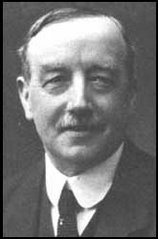
- Uncle Arthur was the affectionate nickname given to Arthur Henderson MP, early Labour MP and Minister, a non-conformist trade unionist who epitomises the christian heritage within Labour's foundations.
No comments:
Post a Comment