Monday, 26 March 2007
Word for the week - Jeremiah 29 vv11-14a
'You will call upon me and come and pray to me and I will listen to you. You will seek me and find me when you seek me with all your heart. I will be found by you, says the Lord' - (Jeremiah 29 vv11-14a.)

Friday, 23 March 2007
The Budget - Uncle Arthur's Thoughts
Attached is a link to a briefing on this week's budget prepared by the Trade Union group of Labour MPs. The Chancellor certainly grabbed the headlines by the highly surprising headline cut in the basic rate of income tax.
This move was clever politically and will put the Tories on the back-foot. However, the debate about the budget in the press seems all too partisan with all the 'rob Peter to pay Paul' platitudes how can we really assess the objective strengths and weaknesses in the budget?
Uncle Arthur is concerned that the abolition of the 10p starting rate appears to affect poor people directly. The balance to this is the boost to the Child Tax credit and further enhancements to the Working Families Tax credit. This policy has to be one of Labour's best policies, but the system needs to be efficient in order to retain it's credibility and mitigate against any 'damage' caused by the disappearance of the 10p rate.
Uncle Arthur would also like to see some recognition and a restoration of the married couple's allowance. No-one is kidding themselves that an extra £55 a month or whatever is the key to re-building marriage in the UK, of course not. But a bold, moral and perhaps spiritual statement by the Government in this regard would be a tremendous stake in the ground. Healthy and committed marriages and strong families would provide a sound foundation to address many of the social problems we face today.
This is Uncle Arthur, checking out, enjoy the weekend (created by God and defended by the Trade Unions!).
http://www.tugroup.net/down/treasurybriefing220307.doc
This move was clever politically and will put the Tories on the back-foot. However, the debate about the budget in the press seems all too partisan with all the 'rob Peter to pay Paul' platitudes how can we really assess the objective strengths and weaknesses in the budget?
Uncle Arthur is concerned that the abolition of the 10p starting rate appears to affect poor people directly. The balance to this is the boost to the Child Tax credit and further enhancements to the Working Families Tax credit. This policy has to be one of Labour's best policies, but the system needs to be efficient in order to retain it's credibility and mitigate against any 'damage' caused by the disappearance of the 10p rate.
Uncle Arthur would also like to see some recognition and a restoration of the married couple's allowance. No-one is kidding themselves that an extra £55 a month or whatever is the key to re-building marriage in the UK, of course not. But a bold, moral and perhaps spiritual statement by the Government in this regard would be a tremendous stake in the ground. Healthy and committed marriages and strong families would provide a sound foundation to address many of the social problems we face today.
This is Uncle Arthur, checking out, enjoy the weekend (created by God and defended by the Trade Unions!).
http://www.tugroup.net/down/treasurybriefing220307.doc
Thursday, 22 March 2007
Labour - For Working People and their Families
Uncle Arthur is not going to opine about yesterday's budget. However, it is important to highlight one announcement that may not be headline grabbing but is significant. The government has decided the expand the funds available to the Financial Assistance Scheme, by a considerable degree. This scheme is designed to help employees who have lost their pension entitlement as a result of scheme insolvency. The scheme was introduced after vigorous campaigning by both Amicus and Community trade unions, through political and legal channels. In 2004 the FAS was set at £400m and will now rise to £8bn.
Although much more needs to be done to expand this scheme even further, this move is most welcome and reflects where Labour's priorities should be focussed - on working people and their families.
The text below is an Amicus/Community press release on the matter.
£8 billion FAS ‘a major step forward to achieving pensions justice’ say Unions
Wednesday, 21st March 2007
Community and Amicus trade unions have welcomed the announcement by Gordon Brown in today’s Budget that the Financial Assistance Scheme (FAS) will rise to £8 billion. Both unions have said it ‘is a major step forward to achieving pensions justice’. Community and Amicus have fought a five year political and legal campaign on behalf of their members who lost their expected pensions when their employer became insolvent.
Commenting on the announcement, Michael Leahy, General Secretary of Community, and Derek Simpson, General Secretary of Amicus, said:
‘’The extension of the FAS to £8 billion is a major step forward to achieving pensions justice. It has been achieved, as have all the other steps to protect employees pensions – including the establishment of the Pension Protection Fund (PPF) – as a result of the political and legal campaigning by Community and Amicus.
'However we believe that the commitment highlighted in the Budget papers means that the FAS will only pay 80% of the pension – not index-linked – which is not enough to meet the pensions justice that those affected need and deserve. Nor is it enough to comply with Article 8 of the European Insolvency Directive. In a case brought by Community and Amicus, the European Court of Justice found that successive UK Governments had acted unlawfully in not implementing the Directive properly.
‘Even with the extra money announced for the FAS today, the effect of inflation must be taken into account. Otherwise, based upon past inflation experience, after 10 years the real value of a pension will fall by a third, after 20 years it will fall by half and after 30 years it will fall by three-quarters. That means a member who is 10 years from retirement, who has paid into a pension scheme for over 30 years, and has an expected pension of £12,000 will receive a pension with a real value of only £7,000 when they retire. 10 years later it will be worth £5,000 at today’s value and, should they live to 85 years of age, it will only be worth less than £2,600 in real terms.
‘We believe that there is widespread public and political support for the view that those who qualify for the FAS should receive the same as those that who are covered by the PPF, which provides 90% of expected pension, index linked to RPI. Julie Morgan MP has tabled an amendment to the Pensions Bill to achieve this. We believe that a Labour Government with a strong moral and social compass will want to achieve this. We call upon all MPs to support Julie Morgan’s amendment’
Although much more needs to be done to expand this scheme even further, this move is most welcome and reflects where Labour's priorities should be focussed - on working people and their families.
The text below is an Amicus/Community press release on the matter.
£8 billion FAS ‘a major step forward to achieving pensions justice’ say Unions
Wednesday, 21st March 2007
Community and Amicus trade unions have welcomed the announcement by Gordon Brown in today’s Budget that the Financial Assistance Scheme (FAS) will rise to £8 billion. Both unions have said it ‘is a major step forward to achieving pensions justice’. Community and Amicus have fought a five year political and legal campaign on behalf of their members who lost their expected pensions when their employer became insolvent.
Commenting on the announcement, Michael Leahy, General Secretary of Community, and Derek Simpson, General Secretary of Amicus, said:
‘’The extension of the FAS to £8 billion is a major step forward to achieving pensions justice. It has been achieved, as have all the other steps to protect employees pensions – including the establishment of the Pension Protection Fund (PPF) – as a result of the political and legal campaigning by Community and Amicus.
'However we believe that the commitment highlighted in the Budget papers means that the FAS will only pay 80% of the pension – not index-linked – which is not enough to meet the pensions justice that those affected need and deserve. Nor is it enough to comply with Article 8 of the European Insolvency Directive. In a case brought by Community and Amicus, the European Court of Justice found that successive UK Governments had acted unlawfully in not implementing the Directive properly.
‘Even with the extra money announced for the FAS today, the effect of inflation must be taken into account. Otherwise, based upon past inflation experience, after 10 years the real value of a pension will fall by a third, after 20 years it will fall by half and after 30 years it will fall by three-quarters. That means a member who is 10 years from retirement, who has paid into a pension scheme for over 30 years, and has an expected pension of £12,000 will receive a pension with a real value of only £7,000 when they retire. 10 years later it will be worth £5,000 at today’s value and, should they live to 85 years of age, it will only be worth less than £2,600 in real terms.
‘We believe that there is widespread public and political support for the view that those who qualify for the FAS should receive the same as those that who are covered by the PPF, which provides 90% of expected pension, index linked to RPI. Julie Morgan MP has tabled an amendment to the Pensions Bill to achieve this. We believe that a Labour Government with a strong moral and social compass will want to achieve this. We call upon all MPs to support Julie Morgan’s amendment’
Wednesday, 21 March 2007
Lesssons from Wilberforce

This weekend sees the celebration of the vote to end the transatlantic slave trade. Rightfully, christians across the UK will be celebrating this supernatural achievement with a variety of events.
Uncle Arthur will be attending a special 24-7 prayer meeting aimed at addressing the twenty-first century evil of human traffik. Proving that though we celebrate the work of Wilberforce and others, the work of social justice is never truly complete.
http://www.stopthetraffik.org/default.aspx
Although, Uncle Arthur is trying to really discover what are the broader lessons for Christians to embrace when considering the inspiring example of William Wilberforce? Here are some thoughts.
1) Engagement is Vital - Christians in the UK need to engage in politics - and do so in a graceful and truthful way. This engagement needs to be comprehensive and not just on the 'fashionable' issues, eg Make Poverty History, as worthy as they are. Wilberforce saw the need to get involved in politics, which calls for some degree of worldly wisdom and getting your hands dirty. We need more christians prepared to engage and not just 'rage.'
2) Worldview - Wilberforce's worldview shaped his politics. He knew that a christian, kingdom perspective could not live with the 'zeitgeist' of the time which assumed that British economic well-being was linked to the slave trade. He had a different view and that inevitable led him to campaign against and deconstruct the prevailing mindset.
3) Politics is mission - we need to see a generation of christians who see the call to service in politics as godly and noble. The earth is the Lords and we need to see a missionary movement of young christians breaking into politics. Wilberforce clearly saw his political career as a calling. In many ways the UK political scene has been a sort of 'unreached people group' by and large, with it's own tribal traditions and definitely its own inscrutable language. Let's pray for a generation of missionaries to reach this 'people group' with the gospel.
4) When we step out, God steps up. Wilberforce has the courage to stand and saw God move. He was persistent and faced many threats, discouragements and set-backs but God delivered. We need to have a measure of that faith and courage today.
Truth and Grace
Uncle Arthur is slightly concerned that the manner in which some christians engage poltically on contemporary issues, plays into the hands of the hostile media and secular opponents.
The government have been a little unwise in the way they have brusquely handled both the SOR debate and the gay adoption issue. The manner in which it has been dealt with has alienated christians. Yet, some christians need to find a language and lobbying/campaigning approach that is more subtle and less aggressive.
The closest thing I have found to a biblical and compassionate position on SOR is the stance taken by the organisation called Faithworks. Judge for yourself.
http://www.faithworks.info/SubSection.asp?id=2485
Uncle Arthur.
The government have been a little unwise in the way they have brusquely handled both the SOR debate and the gay adoption issue. The manner in which it has been dealt with has alienated christians. Yet, some christians need to find a language and lobbying/campaigning approach that is more subtle and less aggressive.
The closest thing I have found to a biblical and compassionate position on SOR is the stance taken by the organisation called Faithworks. Judge for yourself.
http://www.faithworks.info/SubSection.asp?id=2485
Uncle Arthur.
Monday, 19 March 2007
Word for the week - 1 John 4v19
Every week we will look at a scripture and how we can apply it to politics on the left.
"We love because he first loved us. If anyone says 'I love God', yet hates his brother, he is a liar" (1 John 4v19).
These are challening words, love and compassion for one's fellow man should be a guiding principle which shapes our christian lives and our politics. Yet, in the reality of life and the cut and thrust of the political world, love may be in short supply.
The history of the Labour Party has seen immense factional battles, class hatred iginiting political rhetoric and self-love and vanity abnegating any chance of the love of God breaking in.
The motives of others, petty clashes and the tribal inter-party pettiness that pervades UK politics can affect the christian. Yet, we are challenged by God of love, to follow the way of truth and love, knowing that we have been first loved.
Wouldn't it be great if we see some love for fellow man and love between the eventual candidates in this year's leadership elections permeating left politics this year?
"We love because he first loved us. If anyone says 'I love God', yet hates his brother, he is a liar" (1 John 4v19).
These are challening words, love and compassion for one's fellow man should be a guiding principle which shapes our christian lives and our politics. Yet, in the reality of life and the cut and thrust of the political world, love may be in short supply.
The history of the Labour Party has seen immense factional battles, class hatred iginiting political rhetoric and self-love and vanity abnegating any chance of the love of God breaking in.
The motives of others, petty clashes and the tribal inter-party pettiness that pervades UK politics can affect the christian. Yet, we are challenged by God of love, to follow the way of truth and love, knowing that we have been first loved.
Wouldn't it be great if we see some love for fellow man and love between the eventual candidates in this year's leadership elections permeating left politics this year?
Friday, 16 March 2007
Uncle Arthur

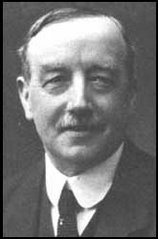
This is Arthur Henderson MP, Labour pioneer and a committed christian and trade unionist. He epitomises the generation of men and women who formed the Labour Party, inspired by their faith and trained and equipped in the training ground of the non-conformist churches and craft unions. He was a loyal and 'rock-like' figure within the Labour Party, keeping things together during the the traumatic period when Macdonald opted to join the National Government, leaving Labour stranded. Perhaps, the actions of Henderson and others kept the show on the road, particularly when the PLP was reduced to a rump.
He was known as 'Uncle Arthur' to many within the Labour Party, hence this website is run on behalf of a collective known as 'Uncle Arthur'.
We hope you enjoy this website.
Wednesday, 14 March 2007
News Statesmen - Faith Column
Dear Mr Davies,
I read with interest your Faith Column. This appears a lively forum for differing, thoughtful contributions from a variety of perspectives and in light of the growing significance of faith in public life, it is a welcome addition to the New Statsman.
I do however note that , although you seem to have a cornucopia of opinions and discourses ranging from scientific scepticism, secular morality, non-religious spirituality, 'old school atheism', radical progressive Judaism, animinism, Hare Krishna, Quakerism and Islam - there is regrettably, only one Christian contribution.
Though I find Mike West's comments thoughtful, persuasive and challenging ,may I humbly suggest that he only represents one very small constituency within the UK Christian community or indeed Liberal Anglicanism. He seems at one point to juxtapose his own liberalism with 'aggressive, fundamentalist creeds', which may be true in some instances but is not really a fair description of those people who are theologically literate and content with pursuing an orthodox path within the Christian faith (i.e. the vast majority of believers in the world) .
Can I suggest you improve this excellent initiative by including a commentator or activist whose theology reflects an evangelical/orthodox perspective? I know of a number of christians, who are committed to left politics and a dynamic faith whose voice is often precluded from these debates, perhaps inadvertently because only one christian opinion is sought. This needn't be so, be a bit more progressive and inclusive and find a writer such as Joel Edwards, Steve Chalke, Tobias Jones etc. I'm sure that such faith perspectives would add a thoughtful and important element to discussions.
Uncle Arthur.
I read with interest your Faith Column. This appears a lively forum for differing, thoughtful contributions from a variety of perspectives and in light of the growing significance of faith in public life, it is a welcome addition to the New Statsman.
I do however note that , although you seem to have a cornucopia of opinions and discourses ranging from scientific scepticism, secular morality, non-religious spirituality, 'old school atheism', radical progressive Judaism, animinism, Hare Krishna, Quakerism and Islam - there is regrettably, only one Christian contribution.
Though I find Mike West's comments thoughtful, persuasive and challenging ,may I humbly suggest that he only represents one very small constituency within the UK Christian community or indeed Liberal Anglicanism. He seems at one point to juxtapose his own liberalism with 'aggressive, fundamentalist creeds', which may be true in some instances but is not really a fair description of those people who are theologically literate and content with pursuing an orthodox path within the Christian faith (i.e. the vast majority of believers in the world) .
Can I suggest you improve this excellent initiative by including a commentator or activist whose theology reflects an evangelical/orthodox perspective? I know of a number of christians, who are committed to left politics and a dynamic faith whose voice is often precluded from these debates, perhaps inadvertently because only one christian opinion is sought. This needn't be so, be a bit more progressive and inclusive and find a writer such as Joel Edwards, Steve Chalke, Tobias Jones etc. I'm sure that such faith perspectives would add a thoughtful and important element to discussions.
Uncle Arthur.
Tuesday, 6 March 2007
Prayer
Thought,
If we are to pray for the leadership of the Labour Party, how should we do so?
What biblical principles guide us and what should we be praying for?
If we are to pray for the leadership of the Labour Party, how should we do so?
What biblical principles guide us and what should we be praying for?
Saturday, 3 March 2007
It is not the critic who counts - thoughts on christian citizenship
It is not the critic who counts; not the man who points out how the strong man stumbles, or where the doer of deeds could have done them better. The credit belongs to the man who is actually in the arena, whose face is marred by dust and sweat and blood; who strives valiantly; who errs, and comes short again and again, because there is not effort without error and shortcoming; but who does actually strive to do the deeds; who knows the great enthusiasms, the great devotions; who spends himself in a worthy cause; who at the best knows in the end the triumph of high achievement, and who at the worst, if he fails, at least fails while daring greatly.
"Far better it is to dare mighty things, to win glorious triumphs, even though chequered by failure, than to take rank with those poor spirits who neither enjoy much nor suffer much, because they live in the gray twilight that knows not victory nor defeat."
This above quote is from Teddy Roosevelt, the great US President in a speech on ‘Citizenship and the new republic’ For the past year and a half I have been waxing lyrical about the desperate need for Christians to be active citizens. Not just in the light of the biblical mandate to be salt and light but the need to see political activity as a noble task is pressing.
Why do I say this? Why is this necessary? And indeed what is a workable and meaningful definition of citizenship that can inspire and guide bible believing Christians passionate to engage in the public realm?
I have found the whole experience of being a Christian active in politics fascinating, being involved in Labour politics and particularly so in the past nine years. After years of passionately being anti-Tory it was a personal elation when ‘we’ got in 1997 and kicked ‘them’ out of power, finally. I have felt a rollercoaster of emotions, disappointment, and yet a growing appreciation of the complexities of politics in those years. I have also seen the good that I believe my Labour government has done for poor people, and working people. I also confess, a frustration at some public attitudes to politics and the manner in which elements of the press report current affairs. We cannot let some politicians off the hook for degrading public life but the juvenile, personality obsession of the media is fuelling public cynicism to an unhealthy degree.
So at a time of increased difficulty for Labour and when the party is in a state of pre-transition and flux, do we as Christians on the left give up and accept disillusionment? Are we straddling a contradiction, engaging in ‘progressive’ politics in a broken world and knowing the temporary limits of politics, whilst believing ultimately that this world was and never will be as the Lord intended it to be? A proper eschatology must underpin our Christian citizenship. We should be realists about the world we live in but as people of faith see politics as a noble and worthwhile calling, entering the muddy and bloodied arena in the face of failure but confident our service will not be in vain.
As people of hope, committed to the kingdom and seeing politics as public service we surely cannot accept disillusionment. Frankly, it is a harder task to be a Labour activist than it was in the halcyon days of 1994-1997. Now, with the reality of government and a bored and cynical public, it is a harder task. Reticence is one thing but cynicism acts as a protection for people from trusting and hoping, it justifies not acting and speaking out. We cannot lapse into cynicism, yes trust must be rebuilt but as christians we are people of hope not disillusionment. Surely, our commitment to politics is seeking to build God’s kingdom, not temporary empires.
Given a balanced theology we can view politics as a noble enterprise. If we believe in Christian involvement in mainstream parties as preferable to the establishment of a ‘christian party’, we need to define the boundaries of our involvement. Now is the time to demonstrate commitment to the flawed but necessary process of democratic politics. Christians need be involved in the healthy plurality of parties, for whatever our concerns about key issues important decisions need to be made in the complex public arena. Avoiding those decisions is an absence of responsibility and a failure in citizenship.
So how and where do we start to deepen our citizenship?
We need to understand the distinction between the role of the kingdom, mandate of the church and how that shapes and informs christian political activism. I am always struck by 1 Kings 18, where Obadiah serving in the Royal Palace uses his influence to protect the prophets from Jezebel’s wrath. This may have been hidden and notionally insignificant but it was an action for good that reflected a man of God using his position with wisdom. In contrast Elijah the prophet has the freedom to rail against Ahab as the ‘troubler of Israel’. I see Elijah as the church, prophetic and unbeholden to the culture of the day speaking God’s word with freedom. In contrast, perhaps Obadiah reflects those in public life and the workplace, being influential, maybe in modest ways but making a difference. Clear and prayerfully informed thinking must guide our activism, not false notions or the trends of the day.
I would lay down a healthy challenge to all those people who rightly mobilised on the ‘Make Poverty History’ campaign. This positive harnessing of energy and engagement should not be lost. Yet the church needs to broaden its public engagement into the more noble and mundane foot-soldiering world of national and local politics. We need to be politically active on the ‘less fashionable’ causes and narratives and we need to set the agenda in the public square. To fulfil this calling we need to develop a more holistic and inclusive christian worldview and embrace a wider dialogue apart from the ‘safe ground’ issues of development, as necessary as they are.
We need a campaign to ensure Christians join the party they vote for. We need to pray and partner with Christians from other parties, (as is slowly happening) recognising we have the kingdom in common first and foremost. Yet this should be done without developing a mushy quasi-theology which says ‘we are all in this together’. Yes, we are all in this together but we have differing roles, ideologies, backgrounds and issues, let’s be honest.
If as Christians we are serious about civic renewal, need to encourage and affirm all those involved in politics, appreciating the complex difficulties faced. We should seriously commit to revitalising democracy, voter turnout and challenging the areas of the media that distort truth whilst encouraging the good.
Finally, we need to articulate a theology of politics as legitimate service. People may not think that some people enter politics with noble motives, that it is necessary and it can deliver good. If we can inject that into the churches thinking we can move away from some of the world’s broken thinking that constrains our imagination.
So in the words of President Roosevelt let’s stay in the arena, accumulate a ‘bit of blood and a bit of mud’ and not accept lazy and hollow secular rejection of politics. There is a need always for the church to speak righteousness and justice to the government of the day, but let us be mindful that our critique does not undermine the legitimacy of effective engagement in public affairs.
With biblical thinking, a realistic programme for action and humble appreciation of God’s people who are colonising politics we can build on where we are. We can engage in politics with confidence, knowing that we spend ourselves in the most worthy of causes.
"Far better it is to dare mighty things, to win glorious triumphs, even though chequered by failure, than to take rank with those poor spirits who neither enjoy much nor suffer much, because they live in the gray twilight that knows not victory nor defeat."
This above quote is from Teddy Roosevelt, the great US President in a speech on ‘Citizenship and the new republic’ For the past year and a half I have been waxing lyrical about the desperate need for Christians to be active citizens. Not just in the light of the biblical mandate to be salt and light but the need to see political activity as a noble task is pressing.
Why do I say this? Why is this necessary? And indeed what is a workable and meaningful definition of citizenship that can inspire and guide bible believing Christians passionate to engage in the public realm?
I have found the whole experience of being a Christian active in politics fascinating, being involved in Labour politics and particularly so in the past nine years. After years of passionately being anti-Tory it was a personal elation when ‘we’ got in 1997 and kicked ‘them’ out of power, finally. I have felt a rollercoaster of emotions, disappointment, and yet a growing appreciation of the complexities of politics in those years. I have also seen the good that I believe my Labour government has done for poor people, and working people. I also confess, a frustration at some public attitudes to politics and the manner in which elements of the press report current affairs. We cannot let some politicians off the hook for degrading public life but the juvenile, personality obsession of the media is fuelling public cynicism to an unhealthy degree.
So at a time of increased difficulty for Labour and when the party is in a state of pre-transition and flux, do we as Christians on the left give up and accept disillusionment? Are we straddling a contradiction, engaging in ‘progressive’ politics in a broken world and knowing the temporary limits of politics, whilst believing ultimately that this world was and never will be as the Lord intended it to be? A proper eschatology must underpin our Christian citizenship. We should be realists about the world we live in but as people of faith see politics as a noble and worthwhile calling, entering the muddy and bloodied arena in the face of failure but confident our service will not be in vain.
As people of hope, committed to the kingdom and seeing politics as public service we surely cannot accept disillusionment. Frankly, it is a harder task to be a Labour activist than it was in the halcyon days of 1994-1997. Now, with the reality of government and a bored and cynical public, it is a harder task. Reticence is one thing but cynicism acts as a protection for people from trusting and hoping, it justifies not acting and speaking out. We cannot lapse into cynicism, yes trust must be rebuilt but as christians we are people of hope not disillusionment. Surely, our commitment to politics is seeking to build God’s kingdom, not temporary empires.
Given a balanced theology we can view politics as a noble enterprise. If we believe in Christian involvement in mainstream parties as preferable to the establishment of a ‘christian party’, we need to define the boundaries of our involvement. Now is the time to demonstrate commitment to the flawed but necessary process of democratic politics. Christians need be involved in the healthy plurality of parties, for whatever our concerns about key issues important decisions need to be made in the complex public arena. Avoiding those decisions is an absence of responsibility and a failure in citizenship.
So how and where do we start to deepen our citizenship?
We need to understand the distinction between the role of the kingdom, mandate of the church and how that shapes and informs christian political activism. I am always struck by 1 Kings 18, where Obadiah serving in the Royal Palace uses his influence to protect the prophets from Jezebel’s wrath. This may have been hidden and notionally insignificant but it was an action for good that reflected a man of God using his position with wisdom. In contrast Elijah the prophet has the freedom to rail against Ahab as the ‘troubler of Israel’. I see Elijah as the church, prophetic and unbeholden to the culture of the day speaking God’s word with freedom. In contrast, perhaps Obadiah reflects those in public life and the workplace, being influential, maybe in modest ways but making a difference. Clear and prayerfully informed thinking must guide our activism, not false notions or the trends of the day.
I would lay down a healthy challenge to all those people who rightly mobilised on the ‘Make Poverty History’ campaign. This positive harnessing of energy and engagement should not be lost. Yet the church needs to broaden its public engagement into the more noble and mundane foot-soldiering world of national and local politics. We need to be politically active on the ‘less fashionable’ causes and narratives and we need to set the agenda in the public square. To fulfil this calling we need to develop a more holistic and inclusive christian worldview and embrace a wider dialogue apart from the ‘safe ground’ issues of development, as necessary as they are.
We need a campaign to ensure Christians join the party they vote for. We need to pray and partner with Christians from other parties, (as is slowly happening) recognising we have the kingdom in common first and foremost. Yet this should be done without developing a mushy quasi-theology which says ‘we are all in this together’. Yes, we are all in this together but we have differing roles, ideologies, backgrounds and issues, let’s be honest.
If as Christians we are serious about civic renewal, need to encourage and affirm all those involved in politics, appreciating the complex difficulties faced. We should seriously commit to revitalising democracy, voter turnout and challenging the areas of the media that distort truth whilst encouraging the good.
Finally, we need to articulate a theology of politics as legitimate service. People may not think that some people enter politics with noble motives, that it is necessary and it can deliver good. If we can inject that into the churches thinking we can move away from some of the world’s broken thinking that constrains our imagination.
So in the words of President Roosevelt let’s stay in the arena, accumulate a ‘bit of blood and a bit of mud’ and not accept lazy and hollow secular rejection of politics. There is a need always for the church to speak righteousness and justice to the government of the day, but let us be mindful that our critique does not undermine the legitimacy of effective engagement in public affairs.
With biblical thinking, a realistic programme for action and humble appreciation of God’s people who are colonising politics we can build on where we are. We can engage in politics with confidence, knowing that we spend ourselves in the most worthy of causes.
Stand at the crossroads and look
'Stand at the crossroads and look. Ask for the ancient paths, ask where the good way is, and walk in it and you will find rest for your souls' (Jeremiah 6v16)
This blogspot is dedicated to restoring the christian foundations of the Labour Party.
MMTM - stands for 'More Methodism than Marx'. It is believed that Labour's roots owe more to the ideology and activism of non-conformist christians than the secular, materialistic ideology of Marxism. Indeed this quote is often attributed to Morgan Phillips or Harold Wilson. Whoever coined the phrase it encapsulates the understanding that deep within Labour's DNA is a strand of christian faith.
In a time when the Labour Party appears to have lost it's way and the aggressive secular agenda seems dominant in the Labour Party, christians on the left are gathering to pray and seek God to renew this presence once again in the Labour Party. We seek to network with christians who are biblically serious and spirit filled and prepared to to take their rightful place on the centre-left.
Currently, politics appears to to be in flux and held in low esteeem in our nation. The forces of cynicism and consumerism seem to be battering the foundations of the body-politic. Thus, we need a new generation of christian pioneers, faithfully serving the original vision of those men and women who, thank God, formed the Labour Party at the very beginning of the 20th century.
We need to develop a discourse, rooted in God's word that articulates that politics is public service, for the christian it is mission also. The church needs to affirm what is good within politics whilst prophetically speaking for justice and righteousness, over and above political expediency. We must not allow one party to be seen as christian and one as secular. If we do not act we could be in a situation, which mirrors to some degree the situation in the US, where christian engagement in politics is associated with the forces of the right. Though caricatured no doubt this strand of ideology is seen as judgemental, biblically narrow and perhaps owing more to cultural factors than the gospel itself. We need in the UK, christian involvement in all parties, and most definately within the Labour movement.
This blogspot is dedicated to restoring the christian foundations of the Labour Party.
MMTM - stands for 'More Methodism than Marx'. It is believed that Labour's roots owe more to the ideology and activism of non-conformist christians than the secular, materialistic ideology of Marxism. Indeed this quote is often attributed to Morgan Phillips or Harold Wilson. Whoever coined the phrase it encapsulates the understanding that deep within Labour's DNA is a strand of christian faith.
In a time when the Labour Party appears to have lost it's way and the aggressive secular agenda seems dominant in the Labour Party, christians on the left are gathering to pray and seek God to renew this presence once again in the Labour Party. We seek to network with christians who are biblically serious and spirit filled and prepared to to take their rightful place on the centre-left.
Currently, politics appears to to be in flux and held in low esteeem in our nation. The forces of cynicism and consumerism seem to be battering the foundations of the body-politic. Thus, we need a new generation of christian pioneers, faithfully serving the original vision of those men and women who, thank God, formed the Labour Party at the very beginning of the 20th century.
We need to develop a discourse, rooted in God's word that articulates that politics is public service, for the christian it is mission also. The church needs to affirm what is good within politics whilst prophetically speaking for justice and righteousness, over and above political expediency. We must not allow one party to be seen as christian and one as secular. If we do not act we could be in a situation, which mirrors to some degree the situation in the US, where christian engagement in politics is associated with the forces of the right. Though caricatured no doubt this strand of ideology is seen as judgemental, biblically narrow and perhaps owing more to cultural factors than the gospel itself. We need in the UK, christian involvement in all parties, and most definately within the Labour movement.
Friday, 2 March 2007
MMTM
MMTM, the short and perhaps intriguing name of this blog stands for 'More Methodism than Marx'. This statement, attributed to Morgan Phillips, is well known and tends to get raised when people reflect on the roots of Labour's spiritual tradition. However, where is that tradition now?
In a secular, post-modern age, will it ever return with resonance or relevance?
In a secular, post-modern age, will it ever return with resonance or relevance?
New Beginnings
Hello,
This blog, is dedicated for christians seeking to find space and a voice in the Labour Party. I hope you like it or at least empathise with the vision and values we are seeking to promote.
This blog, is dedicated for christians seeking to find space and a voice in the Labour Party. I hope you like it or at least empathise with the vision and values we are seeking to promote.
Subscribe to:
Comments (Atom)